Services
Your pet’s wellbeing is our top priority. From routine check-ups to advanced medical care, we offer personalised veterinary services in a calm, caring environment—because your pets deserve the same love and attention we give our own.
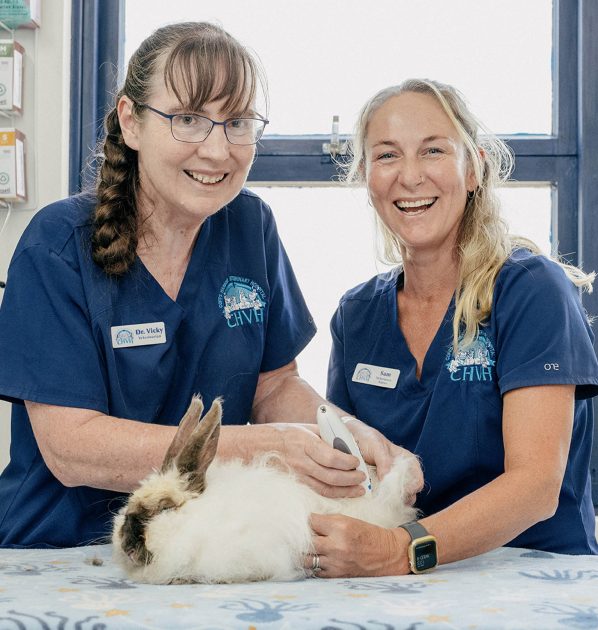
Your pet’s wellbeing is our top priority. From routine check-ups to advanced medical care, we offer personalised veterinary services in a calm, caring environment—because your pets deserve the same love and attention we give our own.
Whether your pet is unwell, has a problem or you just want to make sure they’re as healthy as possible, a veterinary consultation is the first step. Your vet will listen to your concerns, ask questions about your pet’s history and signs, examine your pet and make an initial assessment of their health status. You and your veterinarian will then make a plan for further diagnostic tests, treatments or referral, considering your wishes and budget and the urgency of the situation.
We use gentle handling, pheromones, tasty treats and other techniques to ensure your pet remains as calm and relaxed as possible during their examination.
Consultations operate by appointment so please call or book online at your convenience. Urgent conditions are given priority so please call and discuss your situation with our friendly team.
A consultation is necessary before your pet can be given any prescription medications or injections.
Can’t make a firm time or no appointment available? A drop-off consultation may suit you. Leave your pet with us while you attend to other business. We’ll check them over & liaise with you via phone to ensure your pet receives the care they need.
Can’t drive your pet to the veterinary hospital? Our pick-up-drop-off service operates at restricted times. We collect your pet for their examination and treatments, then deliver them home again without you needing to leave the comfort of your home.
Your pet needs some help from you and us to keep them healthy and happy. Don’t take risks with your pet’s health when prevention is easy, convenient and affordable.
Regular examinations are important for early detection of disease, allowing effective treatment before the disease becomes symptomatic or advanced. Diagnostic tests (eg blood, urine, imaging) may also be recommended to gauge the health of your pet, especially as they age.
Young pets need a health check at least once a year.
Senior pets (over 7 years old) or those with health issues need a health check at least twice a year.
Most pets on ongoing medication require a health check at least every six months for them to continue to be prescribed their medication.
Vaccination is a safe and effective method of preventing contagious and fatal diseases of pets. Your pet needs a primary course of vaccine, then boosters at recommended intervals to provide continued protection. Alternatively, a blood test may be used to assess if your pet is protected or needs a booster vaccination. Risks associated with vaccination are very low and usually outweighed by the risk of your pet contracting a contagious illness, even if they don’t mix with other pets.
Your pet receives a thorough 14-point health check at the time of vaccination.
Dog Core Vaccines: Distemper, Hepatitis, Parvovirus, Parainfluenza, Bordetella (C5)
Cat Core Vaccines: Feline Enteritis, Herpesvirus, Rhinotracheitis (F3)
Rabbit Core Vaccine: Calicivirus
Please call us to get your pet’s vaccinations up to date. Risks of non-vaccination include increased susceptibility to diseases, exclusion from boarding establishments and other premises and inadvertently spreading disease to other pets.
Ask our advice on recommended brands of tick, flea and heartworm preventatives and worming treatments and a personalised plan for your pet’s situation.
The Mid-North Coast is the Tick Paralysis capital of New South Wales so please ensure your pet is receiving an effective tick preventative year-round and search your pets daily for paralysis ticks.
There is a lot of confusing, conflicting information about pet nutrition available. Trust our qualified, experienced veterinarians to recommend the best nutritional products for your pet and to explain some of the risks of feeding certain foods. We stock Delicate Care (Australian made and owned super-premium pet food) and Hills therapeutic diets, and can order other foods on request.
A microchip is a small (rice-grain sized) transponder implanted beneath the skin of your pet via a needle given like an injection. Microchipping identifies your pet permanently, and is a requirement for all pets before registering them with the local council. Should your pet go missing, the microchip is a fail-safe for getting them back home.
Animal shelter staff scan the chip number and contact the registered owner of a lost or stray pet. If you keep your details up to date on the Pet Registry your lost pet is very likely to make their way back to you.
Remember to also place a collar and tag with your phone number on your pet so that members of the public can reunite you with your lost pet.
As pets age, their healthcare needs change. When it comes to senior pets, we focus on early detection and management of age-related conditions to help your pet enjoy a longer, more comfortable life.
This Includes:
Comprehensive senior health examinations
Arthritis and mobility assessments
Regular blood and urine testing
Nutritional and lifestyle advice
Pain management options
Maintaining a healthy weight is vital for your pet’s overall wellbeing. Keeping an eye on your pet’s weight as they grow and throughout their life helps pets safely reach and maintain their ideal weight.
Every time one of our vets or nurses examines your pet, we are monitoring their body condition score and weight and can offer customised diet and exercise plans. Regular weigh-ins are free of charge and are available anytime during our business hours.
It can be quite confronting to be advised that your pet is under or overweight. We provide supportive coaching for pet parents to get their pets back on track with practical, compassionate guidance tailored to your pet’s individual needs.
Your new puppy has just a few weeks’ opportunity to learn important attitudes to the world. Socialisation to other dogs and people, and exposure to a wide variety of novel situations in a non-threatening environment are vitally important for the healthy behavioural development of your puppy. Once your puppy is over four months old, this is very difficult or sometimes impossible to influence.
Classes are run weekly over four weeks for puppies between 8 and 16 weeks of age. You and your family will learn about effective training methods, how to socialise your puppy, some do’s and don’ts in caring for your puppy – and have some fun watching cute puppy antics. Every puppy also receives a free Adaptil collar to help them settle in.
Bring your puppy to our Puppy Classes and enjoy the benefits for the rest of their lives – a confident, outgoing, well-adjusted member of your family. Call for our next start date.
Your pet’s dental health is vitally important to their overall health and wellbeing. Dental disease is the single most common disease of pets and is also the most preventable cause of illness in your pet.
Dental disease is painful, but it doesn’t just affect the mouth. Bacteria and inflammatory chemicals from the disease affect other organs as well, leading to heart, liver and kidney disease over time.
Your pet’s dental health is our priority. Every veterinary examination includes inspection of the mouth, teeth and gums, and your pet can have a free dental health check with our nurse at any time.
Early management of mild or moderate dental disease is key to prevention of severe dental disease. Your veterinarian or nurse will advise when professional cleaning is recommended and how to minimise the development of dental disease.
Dental cleaning is a day procedure. Your pet will require a general anaesthetic for dental cleaning to be performed effectively and safely. Most pets require dental cleaning annually.
Professional cleaning can reverse mild dental disease, however more severe disease is permanent, necessitating management of chronic dental disease for the duration of your pet’s life.
When your pet is receiving dental treatment, we routinely take x-rays of your pet’s teeth and jaw with a specialised dental x-ray machine and dental x-ray plates. This reveals the extent of your pet’s dental disease hiding below the gumline and allows accurate planning of dental treatments and extractions.
We are fully equipped to treat and manage severe dental disease, including periodontal disease and tooth fractures. We perform simple and complex extractions, repair oronasal fistulas, perform subgingival scaling and curetting for localised periodontal disease and surgical removal of gum lesions. Our dental x-ray is essential for planning this. Your pet will thank you for having their painful mouth resolved.
The safety, comfort and wellbeing of your pet are our priorities.
These common operations are actually quite complex surgical procedures and should not be regarded as minor surgery.
In females the ovaries and uterus are removed (ovariohysterectomy) by opening your pet’s abdomen in a sterile surgical theatre under full general anaesthesia, tying off all blood vessels to prevent bleeding and suturing the abdomen in three layers.
In male dogs the testicles are removed, also in a sterile theatre under full general anaesthesia, although the procedure does not commonly involve opening the abdomen unless your pet has retained internal testicles (cryptorchid). Blood vessels and the spermatic cord are tied off to prevent bleeding and the overlying skin is sutured.
In male cats the testicles are removed and tied off under deep sedation and local anaesthesia, but no sutures are usually necessary.
Recovery from desexing is usually 7-10 days of strict rest.
Desexing appointments are available Monday to Friday each week.
From removal of superficial skin lumps and bumps to many complex internal procedures, our highly skilled surgeons are here to assist. Some common elective procedures we offer include:
Urgent and emergency soft tissue procedures are also performed as necessary.
Our state-of-the-art carbon dioxide laser surgery unit gives your pet a better surgical experience. The high-power cutting laser is used instead of a scalpel. Blood vessels, lymphatics and nerves are sealed, and bacteria are vaporised resulting in:
Many brachycephalic (short-faced) breeds of dog and cat have conformation problems in their nasal passages, throat and airways that severely compromise their welfare and quality of life. Surgical intervention to reduce some of these conformation problems can drastically improve their lives. With our surgical laser we can safely and rapidly perform ala-vestibuloplasty (open stenotic nares), palatoplasty (shorten the elongated soft palate), and tonsillectomy (remove enlarged tonsils).
Please book your short-faced pet for a brachycephalic assessment.
Should your pet require orthopaedic (bone/joint) surgery, we can assist in many cases. Our skilled and experienced surgeons are adept in surgical procedures such as:
Of course, the surgery is only one aspect of your pet’s procedure, and they will also receive tailored anaesthesia, analgesia (pain relief), and compassionate nursing care to ensure their recovery is as smooth and rapid as possible.
Should your pet’s procedure be beyond the level of our skill, our surgeons are sufficiently humble and honest to refer your pet to another facility or specialist centre.
Some of our vets have done extra training in eye conditions and regularly perform eye surgical procedures including:
Should your pet require hospital treatment, you can rest easy knowing they are receiving the best of care. We have high nursing staff levels to ensure that your pet experiences thorough and personalised compassionate nursing care. Digital hospital charts ensure effective communication and smooth handover between staff, so your pet receives continuous care. Our hospital wards are CCTV monitored when staff are unable to be present.
Pheromones and calming music are used throughout the hospital, and our team is trained in gentle handling techniques to ensure your pet’s emotional experience is as positive as possible. Your pet will receive lots of cuddles and reassurance (if that’s what they enjoy) or they will be given privacy and quiet (if that’s what they need).
Should your pet require an extended hospital stay, brief family visits are encouraged to support their mental wellbeing, except in certain situations (contagious disease, tick paralysis, seizures) where any excitement or stress may be detrimental.
Our climate-controlled facility is equipped to provide a full hospital service for unwell patients including:
Coffs Harbour is the Paralysis Tick capital of New South Wales; hence our veterinarians and nurses are highly experienced in treatment of this serious condition, including the management of complications that may occur during their convalescence.
Your pet needs to be protected year-round with an effective tick preventive medication and daily tick searches. Should you notice any signs of tick envenomation (wobbly on legs, changed voice, heavy breathing, vomiting, drooling, paralysis) please call our hospital urgently because immediate treatment provides the best chance of your pet’s recovery. Delay can make treatment more difficult, more expensive and, sadly, often unsuccessful. Do not give your pet any food or water until they are seen by the veterinarian.
Your pet’s treatment involves administration of a light sedative, tick antivenom, multiple tick searches, application of a tickicide and hospital care. Often a full body shave, oxygen therapy, fluid therapy, antibiotics, antiemetics and/or eye protectants are required. Hospitalisation and nursing care are imperative for your pet’s recovery, since critical life-threatening complications may arise over the initial few days.
With modern developments, many cancers may now be effectively treated using a variety of modalities and medications whilst maintaining your pet’s quality of life.
We can administer chemotherapeutic medications to treat and manage your pet’s cancer. Your pet may also need an analgesic plan, ongoing staging of their disease and/or palliative care therapy.
Should your pet require more involved treatments, your pet may be referred to a Veterinary Oncologist at a specialist practice.
When your pet has a problem or is unwell, you can feel secure knowing an extensive range of diagnostic testing is available to identify the issue/s.
A full history and clinical examination is the starting point, then your veterinarian will discuss further testing based on their findings, keeping you informed of the likely costs and outcomes at each stage.
Many blood and body fluid tests can be completed in our own laboratory, resulting in rapid turnaround times for prompt management of your pet’s condition.
Our state-of-the-art digital microscope allows cytology samples in our clinic to be analysed by Artificial Intelligence for immediate diagnosis or sent online to a Specialist Pathologist for response in less than half the time of standard pathology.
Some of the in-house tests available:
Your pet’s testing is also supported by a full-service referral laboratory which provides results and pathologist interpretation for those tests that we are unable to perform ourselves, usually within 1-7 days.
Some of the tests we routinely send to pathology:
Your pet’s bones and internal organs can be viewed using x-ray imaging and/or ultrasound imaging, both of which are available in our hospital.
Our experienced veterinarians are skilled in interpreting radiographs and ultrasound images, allowing assessment of internal organs and structures not visible externally. Ultrasound guidance may be used to biopsy organs or masses within the body.
Should further advice be required, your pet’s images can be easily shared digitally for a specialist opinion.
Electrical sensors are clipped on your pet’s body to measure the electrical activity of their heart. This test can detect rhythm abnormalities and is also used to monitor your pet during general anaesthesia.
Blood pressure in animals is measured very similarly to the measurement in people – with a small cuff that fits around their leg or tail. Your pet may need their blood pressure measured regularly if they develop kidney or thyroid disease. Blood pressure is also used to monitor your pet during anaesthesia and surgery.
Your pet’s eyes are precious. Any eye abnormality is potentially an emergency, since many conditions can deteriorate rapidly and vision may be lost rapidly in certain circumstances.
Some of our veterinary surgeons have done extra training in Ophthalmology, and we have a range of diagnostic equipment/procedures to assess your pet’s eyes.
Our vets will refer your pet to a Veterinary Ophthalmologist should they need more specialised testing or treatment such as for cataract removal, corneal surgery or retinal function tests.
Your pet may not fit the standard categories of cats and dogs, but they’re welcome here just the same. Your rabbit, guinea pig, mouse, rat or ferret may need a consultation, dental care, x-ray, blood test, hospital care or surgical procedure and will receive the same caring and considerate attention as other more common pets. We also examine and treat your companion birds, reptiles and fish.
Part of our service to the community includes treating sick and injured wildlife. We are a drop-off point for the public to bring injured, sick or orphaned wild animals and birds where they will be assessed, triaged, treated and hopefully released to a WIRES carer for rehabilitation and return to the wild. We donate our time to this worthy cause so there is no fee for you to bring found wildlife in.
If your pet is in need of emergency veterinary care, we will usually be able to see them straight away. Please call the hospital to ensure we are as prepared as possible for your arrival and to give you instructions for first aid and management of your pet for the trip to the hospital.
If the emergency occurs while we are closed, your call will be directed to the Coffs District Combined Veterinary After-Hours Emergency Service (CCVAS) where an on-call veterinarian from one of the practices in the area will attend to you. The participating practices are located in Coffs Harbour, Moonee and Woolgoolga. Your pet’s condition will be assessed over the phone and if an examination or further treatment is deemed necessary, you will be given directions to the on-call practice for further care. Next day we will receive the patient file from their visit to assist with ongoing care and follow-up.
We are often able to submit your insurance claim electronically, directly to your insurance company for fast payment of claims and no paperwork required.
If your pet is insured with an affiliated company, GapOnly claims can be processed at our hospital, which means you only pay the difference between the total invoice and your insurance benefit.
Our vets are experienced in preparing pets for export to many overseas destinations. We appreciate the importance of accuracy and attention to detail in ensuring your move goes as smoothly as possible.
Once you have decided on a destination and a tentative export date, the recommended first step is to engage a reputable pet transport company to help coordinate your preparations and avoid last-minute disasters.
We can assist with the export testing, vaccinations and certification required for your pet’s preparation in accordance with each country’s import schedule.
Your pet has been a special part of your life and when the time comes to say goodbye, you want the process to be as stress-free as possible. We appreciate how difficult it has been for you to make such a decision and will support you through this tough time.
You can choose to have your pet euthanised at home or at our hospital. Our team will endeavour to make this time peaceful and smooth for all involved and to accommodate your wishes before, during and after the euthanasia.
Afterwards you may opt to take your pet home for burial, or we can organise individual cremation, with return of their ashes for you to keep or scatter.
You will be able to obtain most of your pet’s medication through our in-house pharmacy. We stock a wide range of quality medications to provide a one-stop-shop for your medication needs.
When the veterinarian prescribes treatment for your pet, you will be dispensed the recommended medication from our pharmacy, labelled with directions for correct use. Should your pet require medication from a human pharmacy, our veterinarian will write a prescription for you to obtain the medication from your nominated pharmacy.
Pets needing ongoing medications will require regular scheduled check ups for us to continue to supply these.
Our pharmacy stocks a wide range of injections and emergency drugs to manage your hospitalised pet. Non-urgent medications that aren’t ordinarily stocked may be ordered overnight such as for chemotherapy treatment of your pet’s cancer.
Sometimes a medication is not available commercially in the form or strength required for your pet. We can organise many different medications to be formulated for you by a compounding pharmacy.
Many pet owners request a written prescription to purchase medications through online pharmacies. Caution should be used since there is no certainty that the medications have been dispensed, labelled, stored or transported correctly.
Visit our online Pet Portal to organise repeats of your pet’s ongoing medication and we will contact you when it is ready to collect.
For your convenience, a considered range of quality pet-care products are available for sale at competitive prices. We only stock products which we believe are best for your pet and you.
Should you be unable to locate a certain item, we may be able to source it for you through our suppliers – often overnight. Just ask our friendly team.
You are also supported by our knowledgeable team with advice on the most effective products for your pet and situation and information about all of our stocked products.
Visit our online Pet Portal to order your product and we will contact you when it’s ready to collect.
Pet foods